


PHARMA
& BIOTECH
Peptides are short chains of amino acids that can act as hormones, biological signals or active pharmaceutical ingredients. They occur naturally in the body and can also be produced by chemical synthesis or recombinant technology. Insulin and GLP-1 receptor agonists are familiar peptide medicines. An agonist refers to a chemical substance or drug that binds to a receptor on a cell and activates it, triggering a biological response. The category also includes products used in osteoporosis, growth disorders, ophthalmology and other therapeutic areas.
Public interest has risen rapidly over the years on peptides and its potential weight loss, muscle building, recovery and skin rejuvenation applications. This leads to many content combining approved medicines, nutritional or cosmetic products and experimental substances that do not necessarily share the same evidence or regulatory status.
Discover in this article what peptide therapy means, why weight-loss and performance-related peptides are attracting attention, how regulated peptide medicines are produced at scale and how Boccard can support pharmaceutical manufacturers and CDMOs investing in peptide-production facilities!
What are peptides and how does peptide therapy work?
What is a peptide?
A peptide is a defined sequence of amino acids. The US Food and Drug Administration (FDA) describes peptides as amino-acid sequences that may occur naturally or be produced synthetically or through recombinant DNA technology. The FDA considers polymers of 40 or fewer amino acids to be peptides. Meanwhile, scientific usage is broader: insulin, for example, is commonly described as a peptide hormone despite containing 51 amino acids across two linked chains.
Peptide therapy uses a peptide or peptide-based molecule to influence a biological process. A therapeutic peptide may replace a natural hormone, activate or block a receptor, or reproduce part of a biological signal. Its amino-acid sequence and any engineered modifications influence target binding, stability and duration of action.
How are peptide medicines different from conventional medicines?
Peptides occupy an intermediate molecular space between conventional small-scale molecule drugs and larger biological medicines, although the boundaries between these categories depend on the scientific and regulatory context. Peptide medicines contain chains of amino acids, whereas conventional small-molecule medicines such as aspirin have smaller chemical structures. Larger biological medicines, including monoclonal antibodies, generally have more complex protein structures.
All these medicines interact with biological targets to produce a therapeutic effect. The practical differences concern how they reach those targets and how long they remain active. Many small-molecule medicines can be absorbed through the digestive tract, while peptides often face enzymatic breakdown and difficulty crossing the intestinal barrier. Consequently, many peptide medicines are injected, although specially developed oral formulations, including oral semaglutide, demonstrate that oral delivery is possible. These characteristics influence formulation, delivery route and dosing frequency.
Are all products described as peptides the same?
Products described as peptides fall into several categories:
- Approved peptide medicines that have been reviewed for defined indications, manufacturing controls, quality, safety and effectiveness by the relevant authority.
- Nutritional or cosmetic peptide products such as collagen peptides and topical copper-peptide formulations. Their composition, intended use and regulatory pathway differ from prescription medicines.
- Investigational or unapproved peptides may be studied scientifically but promoted online before sufficient evidence or regulatory approval even exists. “Research use only” labelling does not establish that a product is suitable for human use.
Why are peptides receiving so much attention?
Why are peptides for weight loss so widely talked about today?
The rising popularity of GLP-1 medicines used in obesity and type 2 diabetes care has brought peptide therapies into mainstream discussion. These medicines activate receptors for the gut hormone GLP-1, increasing insulin release when blood glucose is elevated and reducing appetite. Semaglutide also reduces glucagon secretion and delays early gastric emptying. The use of broader expressions such as “fat loss peptides” or “peptides for weight loss” to describe these medicines encompasses substances with very different mechanisms and evidence levels.
In terms of safety, the FDA has warned that unapproved GLP-1 products do not undergo its pre-market review for safety, effectiveness and quality. Compounded medicines should be used only when a patient’s medical need cannot be met by an existing, approved medicine. For this reason, it is worth noting that a responsible discussion of peptides for weight loss should distinguish approved therapies from investigational compounds and online products.
What are muscle-building peptides and bodybuilding peptides?
Interest in “muscle building peptides” often centres on the pathway of the growth hormone IGF-1. For example, sermorelin stimulates the pituitary gland to release growth hormone, which promotes production of insulin-like growth factor-1 (IGF-1). IGF-1 activates cellular signalling involved in muscle protein synthesis and reduced protein breakdown. This biological rationale has fuelled performance claims, although clinical evidence does not establish reliable strength gains in healthy users and increases in lean mass can partly reflect fluid retention.
On the other hand, the expression “testosterone peptides” mixes distinct hormone families: testosterone belongs to the steroid hormones, whereas growth hormone and IGF-1 are amino-acid-based molecules with differing receptors and biological pathways.
What role do GHK copper peptides play in skin-ageing discussions?
GHK-Cu is a copper-binding tripeptide used in topical skincare products. Laboratory studies link it to fibroblast activity and the production of collagen and elastin, the structural proteins that support skin firmness and elasticity. These findings underpin its use in cosmetic creams and serums, although clinical results depend on the formulation and evidence base.
A 2026 systematic review of oral and topical peptides reported improvements in hydration and brightness and a modest, pooled effect on wrinkles, while results for elasticity and density were inconsistent. Most included trials concerned oral formulations, with only two topical studies, so the findings should be interpreted by peptide type and delivery route. Evidence for topical skincare also requires separate assessment from injectable use. The FDA’s May 2026 compounding document places non-injectable GHK-Cu under evaluation and states an intention to consult its advisory committee before the end of February 2027.
Which peptide therapies are used or investigated in medicine?
Metabolic diseases and weight management
Insulin is one of the longest-established peptide medicines and regulates blood glucose. According to the FDA’s revised draft product-specific guidances published in July 2026, other products associated with weight management that are covered include liraglutide, semaglutide and tirzepatide, as well as glucagon and dasiglucagon. Liraglutide and semaglutide activate GLP-1 receptors; tirzepatide activates both GLP-1 and GIP receptors, supporting glucose control and appetite regulation in approved products. We also find glucagon-based rescue medicines, such as Ogluo (glucagon), which address a different need: treating severe hypoglycaemia by stimulating the liver to release stored glucose into the bloodstream.
Together, these examples illustrate the range of peptide manufacturing needs, from established hormone replacement to emergency treatments and metabolic medicines.
Bone, growth and ophthalmology applications
Beyond metabolic care, the FDA’s 2026 draft guidance set includes teriparatide, vosoritide and pegcetacoplan for bone and opththalmology applications. Teriparatide, for example, reproduces part of parathyroid hormone and stimulates osteoblasts, the cells responsible for bone formation, in osteoporosis. Vosoritide activates natriuretic peptide receptor B, counteracting the overactive FGFR3 signalling that restricts bone growth in achondroplasia. Pegcetacoplan binds complement protein C3 and its fragment C3b, reducing downstream complement activation; its ophthalmic product is used in the US for geographic atrophy secondary to age-related macular degeneration.
Peptides in oncology and antimicrobial research
In oncology, peptides can act as targeting carriers that recognise receptors on tumour cells. A peptide-drug conjugate links this carrier to a cytotoxic payload: receptor binding helps direct the conjugate towards the tumour, while the linker controls payload attachment and, in some designs, release them. An established related approach is peptide receptor radionuclide therapy: lutetium Lu 177 dotatate binds somatostatin receptors on selected neuroendocrine tumours and delivers radiation that damages cells. Antimicrobial peptides and molecules such as melittin are also investigated for biological activity, but development status and clinical evidence vary by candidate.
What are BPC-157, TB-500 and other peptides promoted online?
BPC-157 and TB-500: tissue-repair research and safety
Thymosin beta 4 is a naturally occurring actin-binding peptide involved in cell movement and tissue repair, whereas TB-500 is an acetylated fragment corresponding to part of its amino-acid sequence. Shortening the molecule and modifying its structure for a shorter fragment such as the case here can change its biological activity and behaviour in the body, in consequence requiring a separate assessment. However, the FDA’s assessment identifies limited evidence for TB-500 and distinguishes its properties from those of full-length thymosin beta 4.
The wider online peptide market can blur research and human use. In a 2025 warning letter, the FDA stated that products labelled “research use only” or “not for human consumption” may still be treated as human drugs when marketing claims demonstrate that intended use. The agency warned that unapproved products may be contaminated, counterfeit or contain variable active ingredients.
Other peptides grouped by biological function
- Growth-hormone signalling: sermorelin and CJC-1295. Both mimic growth hormone-releasing hormone and stimulate pituitary growth hormone release, with downstream effects on IGF-1. Sermorelin has a history of medical use in growth hormone deficiency, while CJC-1295 has early human pharmacology data. Neither has established approval for physique or performance enhancement.
- Direct growth-factor signalling: IGF-1 LR3. This modified IGF-1 analogue activates the IGF-1 receptor, engaging pathways involved in protein synthesis and cell proliferation. The 2026 review identified no peer-reviewed human clinical studies for IGF-1 LR3, leaving performance benefits and long-term safety unestablished.
- Fat and energy metabolism: AOD-9604 and MOTS-c. AOD-9604 is a growth-hormone-derived fragment investigated for fat-metabolism effects; clinical development has not established it as an effective obesity treatment. MOTS-c is a mitochondria-encoded peptide linked to AMPK, a cellular energy-sensing pathway. Preclinical studies have explored improved glucose handling and insulin sensitivity, but these findings do not establish a therapeutic benefit in humans.
- Cellular ageing: epithalon. Also called epitalon, this synthetic tetrapeptide is investigated for effects on telomere-maintenance pathways and cellular ageing markers. An October 2026 review found limited human evidence and no adequately powered randomised trial establishing therapeutic efficacy, with long-term safety questions unresolved.
- Pigmentation: Melanotan 2. This synthetic melanocortin-receptor activator is promoted for increasing skin pigmentation. Its biological action has not established it as an approved tanning medicine, and the FDA has identified significant safety concerns associated with compounded use.
Which peptide medicines already have established clinical uses?
Peptide medicines already have established roles in clinical care. Insulin is essential for survival in people with type 1 diabetes, while approved GLP-1-based products support the management of type 2 diabetes and, for specified products, obesity. Beyond metabolic care, teriparatide stimulates bone formation in osteoporosis and vosoritide supports bone growth in eligible patients with achondroplasia. These examples illustrate the therapeutic importance of peptide medicines across distinct diseases.
How are pharmaceutical peptides produced?
Which production routes are used for peptide APIs?
The production route depends on the molecule and its required modifications:
- Solid-phase synthesis: the peptide chain is built on a solid resin by successive amino-acid additions. Washing then separates the resin-bound peptide from excess reagents before the chain is released and purified.
- Solution-phase and fragment approaches: reactions take place in solution, either adding amino acids sequentially or joining separately prepared peptide fragments. Fragment condensation assembles a longer sequence from these shorter building blocks.
- Recombinant production: engineered microorganisms express the peptide or a precursor during cultivation, followed by recovery, processing and purification.
- Semi-synthetic production: a biologically produced peptide or precursor is modified through chemical or enzymatic processing. For example, hybrid routes for GLP-1 analogues combine recombinant backbone production with subsequent chemical modifications.
How does peptide production move from development to commercial scale?
When scaling up a peptide process and increasing volume, manufacturers must preserve its product quality while adapting throughput, utilities, automation, cleaning and containment to the selected route. The scale up of peptides is currently trending, as sustained demand for peptides and oligonucleotides incentivise continued expansion of and investments in high-volume manufacturing capacity.
For Big Pharma and CDMOs, modular equipment can support phased deployment, defined production campaigns and brownfield integration. The appropriate configuration depends on the molecule, the selected process and the equipment already in place.
What equipment can support a peptide-production facility?
Depending on the production route and project scope, a peptide facility may require the following connected systems:
- Preparation and formulation: process vessels, buffer and solution preparation, intermediate storage and thermal-control systems.
- Separation and product handling: filtration and purification interfaces, transfer systems and process skids matched to the selected process.
- Utilities and hygienic integration: Water for Injection (WFI), purified water, pure steam, hygienic piping and cleaning-in-place/sterilisation-in-place (CIP/SIP) interfaces.
- Control and traceability: instrumentation, automation, batch control, production monitoring and qualification documentation.
Specialised operations such as peptide synthesis, preparative chromatography, lyophilisation and fill-finish require a project-specific equipment and qualification scope.
How can Boccard support peptide-production investments?
Boccard Pharma & Biotech is your pharma end-to-end EPCM solution provider and partner of choice that designs to build and deliver full, turnkey installations for brownfield and greenfield peptide-production projects with competitive TCO. Through our unique “menu” and “à la carte” approach, you select individual scopes of work from engineering, digitalised modular skid prefabrication, installation, utilities integration and GMP qualification, or combine them under one full EPCM contract, depending on your production needs and what you already have in place. With demonstrated expertise spanning more than 100 years across process industries, Boccard helps reduce project risks and improve compliance and predictability in your production.
Insulin from pilot equipment to industrial production
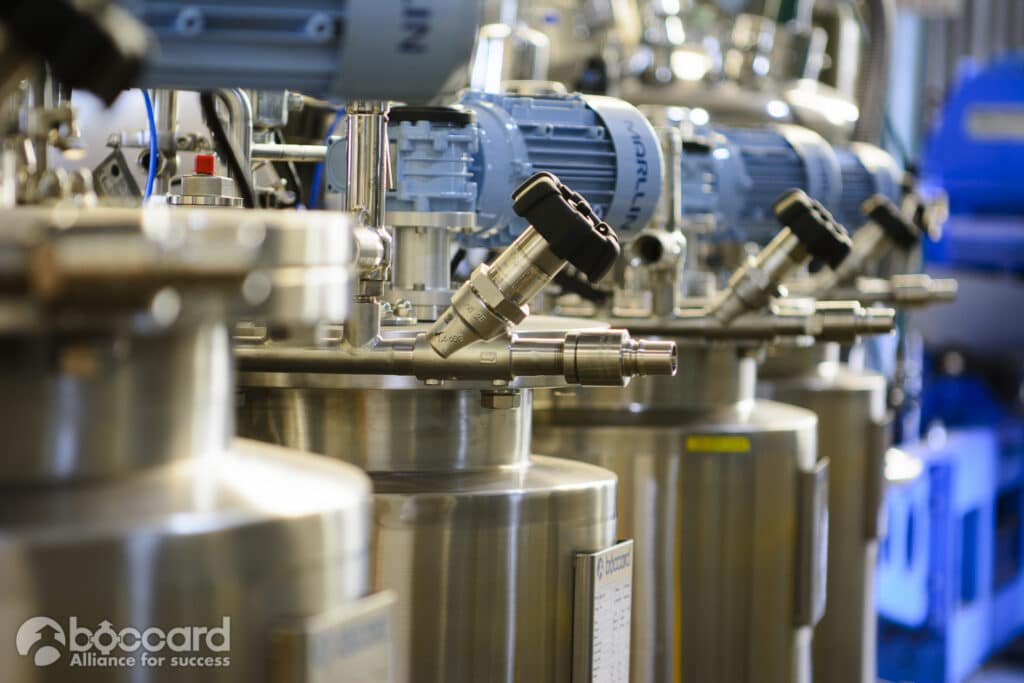
In 2017, Boccard supported a technology-transfer project between pharmaceutical sites in Mexico and India, designing and constructing two modules to move from pilot equipment to production. The scope included three 50 L mobile vessels and one 100 L mobile vessel, a thermal-control skid, pH control, CIP and automation. Engineering, procurement, commissioning assistance and qualification support were coordinated across both countries, with simultaneous qualification in India and Mexico.
GLP-1 production equipment and clean utilities
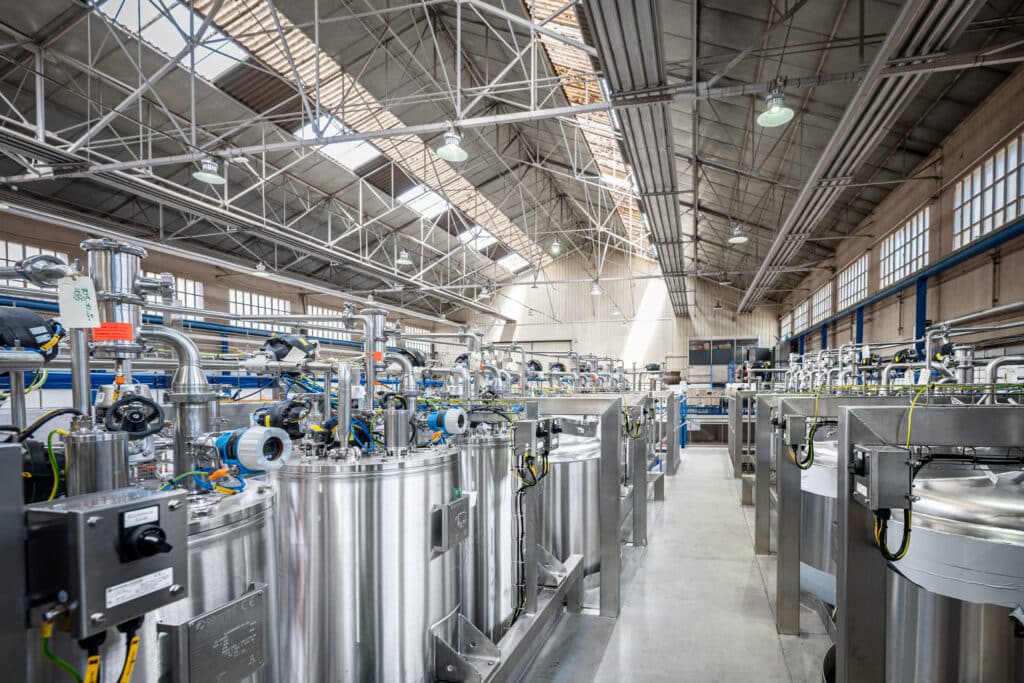
Boccard recently collaborated with a French pharmaceutical manufacturer on a project involving 19 new skids and modules, five revamped skids and two super-skids dedicated to chromatography harvesting. The scope connects buffer preparation, purification and intermediate storage, with more than 9,000 engineering hours and integration of existing vessels. Read the GLP-1 production case study for the detailed equipment and qualification scope.
Together, these insulin and GLP-1 references demonstrate experience in process equipment, modular integration and clean utilities for peptide medicines.
Want to learn more about our solutions for
Pharma & Biotech?
Key points
Peptide therapy extends well beyond insulin and GLP-1 medicines, with regulated products used across metabolic, bone, growth and ophthalmology applications
High-volume searches for weight-loss, muscle-building and recovery peptides mix approved medicines with cosmetic, nutritional, investigational and unapproved products; these categories require clear separation
Peptide API production may use synthetic, recombinant or semi-synthetic routes, with product-specific requirements for impurity control, purification, utilities and scale-up
Boccard’s insulin and GLP-1 references demonstrate experience in pilot-to-production equipment, formulation infrastructure, modular process integration and clean utilities for peptide medicines
scope of work, EQUIPMENT AND SERVICES SUPPLIED
- Engineering and project delivery: Process studies, detailed design, project management and integration planning for brownfield or greenfield investments.
- Process and formulation equipment: Modular skids, process and mobile vessels, thermal control, pH control and preparation systems, subject to the defined project scope.
- Utilities and hygienic integration: WFI, purified water, pure steam, compressed gases, hygienic piping and CIP/SIP interfaces according to process requirements.
- Automation and qualification: Process control, production monitoring, FAT, SAT, IQ and OQ support where included in the contract.
- Flexible contracting: Individual scopes through the “menu” and “à la carte” offer or one coordinated EPCM contract.
FREQUENTLY ASKED QUESTIONS
What are peptides?
Peptides are amino-acid chains that can act as biological signals, hormones or active medicines. Their scientific usage includes molecules such as insulin, while regulatory definitions can apply specific chain-length criteria that limits their length and complexity. Peptide medicines can be produced through chemical, recombinant or semi-synthetic routes.
Are insulin and GLP-1 medicines examples of peptides?
Yes. Insulin is a peptide hormone. Liraglutide and semaglutide are GLP-1 receptor agonists, meaning they bind to and activate GLP-1 receptors to influence blood-glucose control and appetite. Tirzepatide activates both GLP-1 and GIP receptors.
How are pharmaceutical peptides manufactured?
Some examples of manufacturing routes include solid-phase or solution-phase chemical synthesis, recombinant production in engineered cells and semi-synthetic approaches combining biological production with chemical or enzymatic processing. The molecule and its required modifications determine the route.
Are BPC-157 and TB-500 proven recovery treatments?
Current evidence does not establish the safety and effectiveness of marketed BPC-157 or TB-500 products for recovery: the FDA identifies substantial evidence and safety gaps for BPC-157. Findings for full-length thymosin beta 4 also require separate assessment for its TB-500 fragment, because differences in molecular structure can change biological activity.
What are the challenges in peptide production scale-up?
Closely related impurities, product stability and purification capacity require product-specific manufacturing and quality controls. At facility level, process equipment, utilities, cleaning and automation must be integrated around the selected route. Boccard’s GLP-1 production case study illustrates the equipment and integration scope involved in an industrial project.
How can Boccard support peptide-production projects?
Boccard can support engineering, modular process equipment, clean utilities, installation and qualification within an agreed project scope. Our insulin and GLP-1 references illustrate these capabilities in peptide-medicine applications.
You have a project ?
Our Customers
They trust us